Updated October 2026
Total cost of ownership for a ride-on spreader sprayer is the purchase price plus fuel or electricity, engine oil, clutch and tune-up parts, downtime, minus resale value, spread over the seasons you run it. On PermaGreen's two powertrains the hopper, tank and spread/spray system are identical, so the comparison comes down to the power source and the service it needs.
This guide gives you a method, not a headline number. Your route, fuel price and electric rate are your own, so fill in the worksheet below with your figures. For today's factory-direct price and financing on either machine, use the configurator at /buy.
What does a total-cost-of-ownership comparison include?
It includes every cost that differs between the two machines over the years you plan to keep them. Costs identical on both drop out.
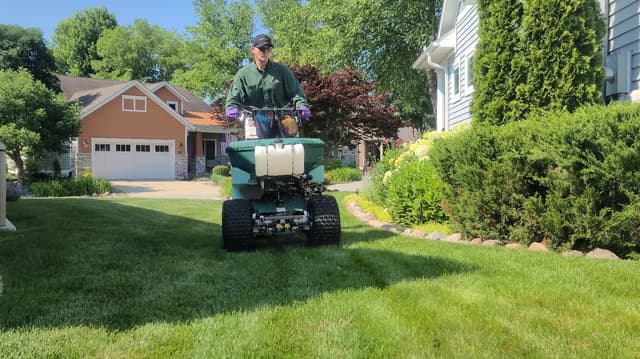
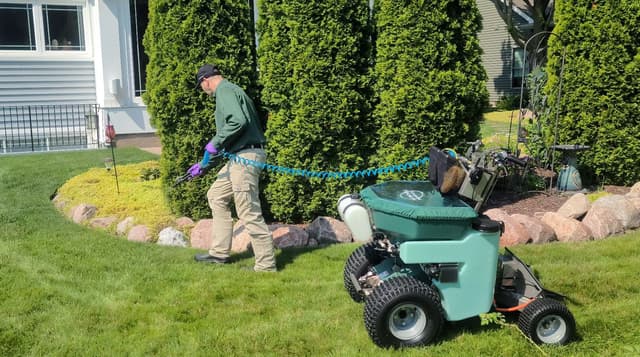
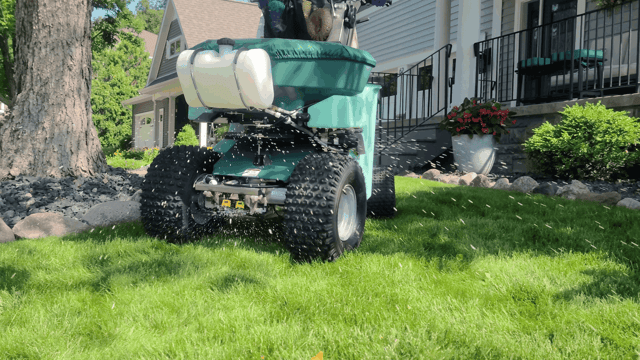
The Legacy is the battery-electric Triumph. It keeps the same 150-pound hopper, 12-gallon tank, one-acre coverage, gate-friendly frame and spread/spray system. The only change is the power source: a swappable 48-volt battery and electric motor replace the gasoline engine and the oil-bath wet clutch. That tells you which rows matter.
Which costs go away on an electric spreader sprayer?
Four go away: gasoline, engine oil, oil-bath clutch service, and the plugs, air filter and carburetor a gas engine needs.
- Fuel. No gasoline, stabilizer or cans to haul and store. The Legacy charges from a standard outlet.
- Engine oil. An electric motor needs no crankcase oil, so there are no routine oil changes.
- Clutch service. A belt-and-pulley system drives the transaxle and pump, with no oil-bath wet clutch to wear out or service.
- Tune-up parts. No spark plugs, air filter or carburetor to clean, replace or troubleshoot.
Electricity is not free, so enter your local rate in the worksheet rather than assuming zero.
Which costs stay the same on both machines?
Everything that makes it a spreader sprayer stays the same: hopper, tank, coverage and the spread/spray system.
Both carry a 150-pound hopper (three bags of fertilizer per fill) and a 12-gallon tank (a full acre of spray per fill). Both cover about an acre in roughly 15 minutes and clear a standard yard gate at 35.5 inches wide. Because coverage per hour does not change, productivity enters the worksheet only through downtime and refuel or swap stops.
How do you calculate fuel cost for a gas spreader sprayer?
Start from the published operating fact for the gas Triumph: one gallon of fuel lasts 4 or more hours of operation. Divide your annual machine hours by four to get gallons, then multiply by your local pump price.
Because 4 hours is stated as a floor, this gives a conservative gallons figure. Use your own logged hours, and add the time your crew spends on fuel stops.
How do you calculate electricity cost for the Legacy?
Use the pack's stated energy and your local rate. The Legacy battery holds 3.2 kWh, and recharge takes roughly 3 hours at the pack's rated charge current. Energy per recharge, times your rate per kilowatt-hour, times recharges per season, gives the electric line.
PermaGreen does not publish a runtime in hours per charge here. Ask us for current runtime data for your route before you size your battery count, and use that answer for recharges per season.
What does the TCO worksheet look like?
Copy this table into a spreadsheet, enter your own figures for each machine, and sum each column over the seasons you plan to own it.
| Line item | Gas Triumph | Electric Legacy | What to enter |
|---|---|---|---|
| Purchase and financing | ____ | ____ | Factory-direct price and financing cost from /buy |
| Fuel or electricity | ____ | ____ | Gas: hours divided by 4, times pump price. Electric: recharges times kWh times your rate. |
| Engine oil and filters | ____ | None | Oil, filter and labor for routine changes |
| Clutch service | ____ | None (belt drive) | Oil-bath wet clutch service on the gas machine |
| Tune-up parts | ____ | None | Plugs, air filter, carburetor work |
| Battery pack wear | None | ____ | Current pack pricing and expected life for your duty cycle; ask us |
| Downtime days | ____ | ____ | Days out of service per season, times what a lost route day costs you |
| Hopper, tank, spread/spray system | Same | Same | Identical on both; nothing to enter |
| Resale value | ____ | ____ | Your expected resale at the end of the ownership period, subtracted |
What does the electric machine add to the worksheet?
The battery pack is the one line the gas machine does not have. The pack is rated for 2,000 charge cycles at 80 percent depth of discharge, is sealed to IP67, and weighs 42 pounds.
Enter the pack as its own row. Divide the rated cycles by the cycles you expect to use per season to estimate how many seasons it lasts. If you keep a second pack on the charger, add it as a second line.
How should you count downtime and route capacity?
Count the days each machine is out of service per season, plus time lost to refueling or battery swaps. Fill this row in even if it is an estimate; it is the row your crew feels first.
- Gas: oil changes, tune-up work, clutch service and fill-ups from gas cans.
- Electric: recharge and swap time. The pack lifts out in seconds, and a charged spare keeps the machine working.
Which is cheaper to own, electric or gas?
It depends on your hours, your fuel and electric rates and your service costs, so one answer for every fleet would be a guess. The structure is clear: electric removes four recurring cost lines and adds a battery line, while the gas machine keeps its fuel and service lines.
| If your route looks like this | Worksheet likely favors | Why |
|---|---|---|
| Daily crews that return to a base with an outlet | Electric Legacy | Fuel, oil, clutch and tune-up lines are removed |
| Noise-sensitive properties, early starts | Electric Legacy | An electric motor runs without gasoline-engine noise |
| Long days far from any outlet | Gas Triumph | Gasoline can be carried and refilled anywhere |
For the power-source comparison on noise and route fit, see the Legacy and the gas Triumph.
Bottom line
Electric and gas ride-on spreader sprayers differ in five cost lines: fuel or electricity, engine oil, clutch service, tune-up parts and the battery pack. Everything that spreads and sprays is identical. Fill in the worksheet with your own hours and rates, add your downtime days, and the cheaper machine for your route will show itself.
See today's factory-direct price for either machine in the configurator at /buy. Financing and Net 30 terms for qualified businesses are on the financing page. Every PermaGreen ships free within the continental US and carries a 60-day buy-back guarantee: run it on your own routes, and if it does not earn its keep, PermaGreen buys it back.