Updated October 2026
A walk-behind spreader and a spray hose make the applicator walk every lawn on the route, and the application rate follows the operator's pace. A ride-on spreader sprayer such as the PermaGreen Triumph takes most of that walking out of the job and sets the rate from ground speed, so the quality of the work depends less on how tired the operator is by mid-afternoon.
How high is turnover in landscape field crews?
NALP's summary of its 2024 Compensation & Benefits Report, based on 2023 data from 169 organizations, put turnover in operations roles at 23% across all respondents and at 35% for larger companies.
Why does application work wear crews down?
On a walk-behind route, the applicator pushes a loaded spreader across each lawn, then drags hose or carries a backpack sprayer for the liquid and trim work, then repeats it at the next stop.
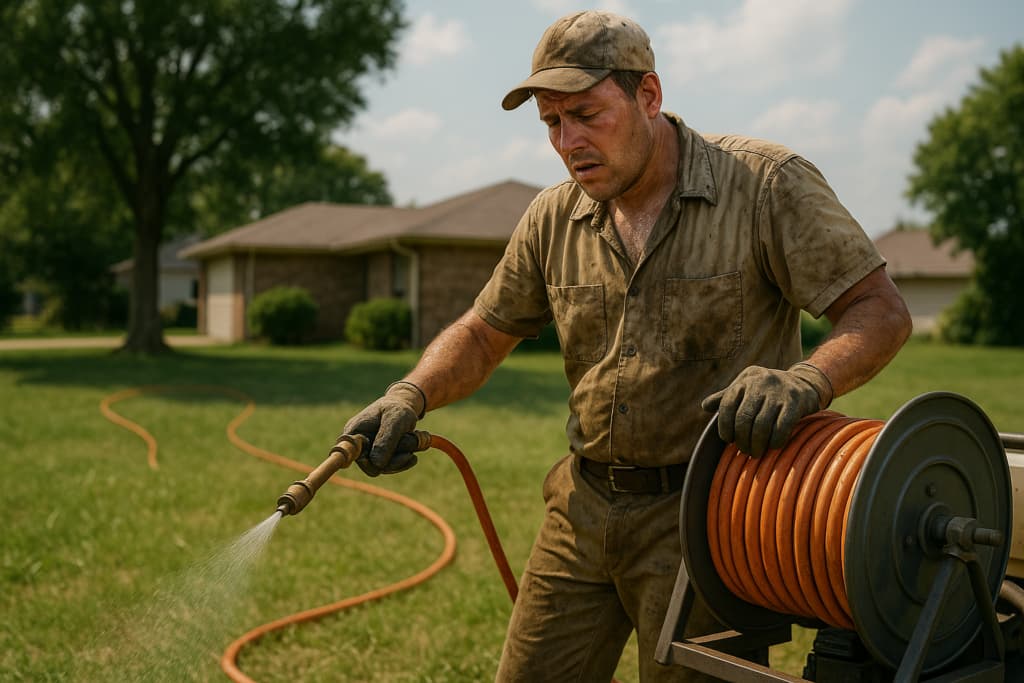
Fatigue also shows up in the lawns. With a walk-behind spreader, the operator has to watch walking speed to keep the rate right. A tired operator who slows down can put down more product per square foot, and one who hurries to catch up can put down less. Uneven rates can leave hot spots and thin areas, and those can turn into callbacks.
What changes when the applicator rides?
The Triumph's operator rides standing up, on an ergonomic platform with foam anti-slip footpads, instead of walking behind the spreader. It steers with handlebars like a bicycle, and to stop, the operator lets off the throttle and pulls the brake levers. Smart Steer, PermaGreen's patented brake-assisted steering, keeps the steering feel the same whether the hopper is full or empty. For tight spaces, or for a new operator's first days, the handlebars lower for walk-behind operation.
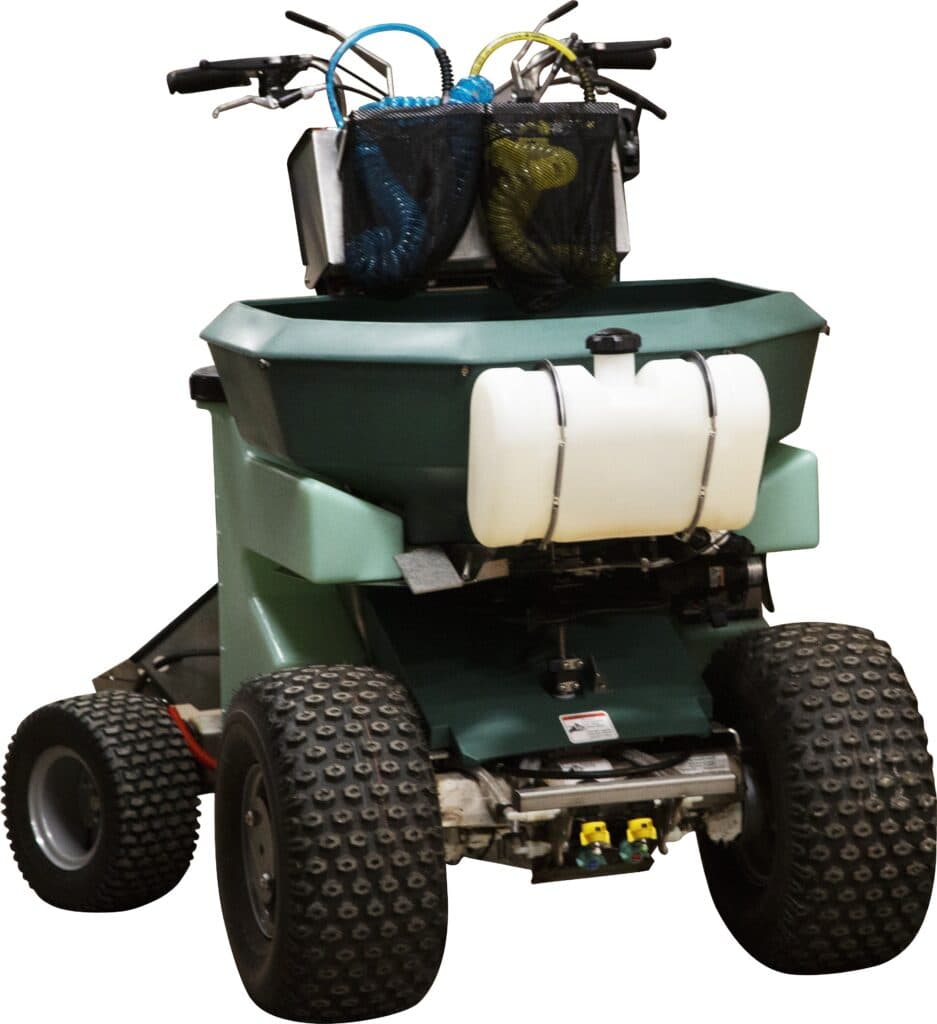
Capacity cuts the trips back to the truck. The 150-lb hopper holds three bags and the 12-gallon liquid system holds two 6-gallon tanks, and each treats up to an acre per fill. The optional Auto-Fill system refills the tanks in about 2 minutes while the operator loads the hopper. The optional spot spray gun handles trim work, so nobody has to carry a backpack sprayer. At 35.5 inches wide, the Triumph fits through standard 36-inch gates, so a gated backyard does not send anyone back to a push spreader.
India, owner of MVP Lawn Care in Northpoint, NC, described it in a PermaGreen customer video: "And it is a labor-saver. A lot more done. Done a lot quicker. Not as tired."
| Task | Walk-behind spreader and hose | PermaGreen Triumph |
|---|---|---|
| Crossing the lawn | Walks behind a push spreader | Rides a standing platform: 3.5 mph in low gear, 5 mph in high |
| Application rate | Changes with walking speed | Spray rate and spreader output adjust to match ground speed |
| Spray calibration | Set and checked by the operator | Sprayer pre-calibrated for parallel passes on 7-foot centers at 1 quart per 1,000 square feet |
| Liquid and trim work | Hose or backpack sprayer | Onboard 12-gallon tanks, with an optional spot spray gun for trim |
| Refills | Back to the truck when the spreader or tank runs out | 150-lb hopper and 12 gallons, each up to an acre per fill; optional 2-minute Auto-Fill |
| Gates | Push spreaders fit most gates | 35.5 inches wide, fits standard 36-inch gates |
| Coverage | Depends on the operator's pace | About 4 acres per hour, or one acre in 15 minutes |
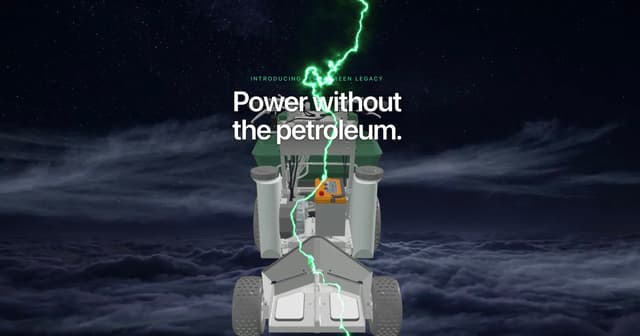
If you also want gas cans and pull-starts out of the day, the Legacy is the battery-electric version of the Triumph. A quiet electric motor replaces the gasoline engine, and a swappable 48-volt battery lifts out in seconds.
How does the Triumph keep the application rate steady?
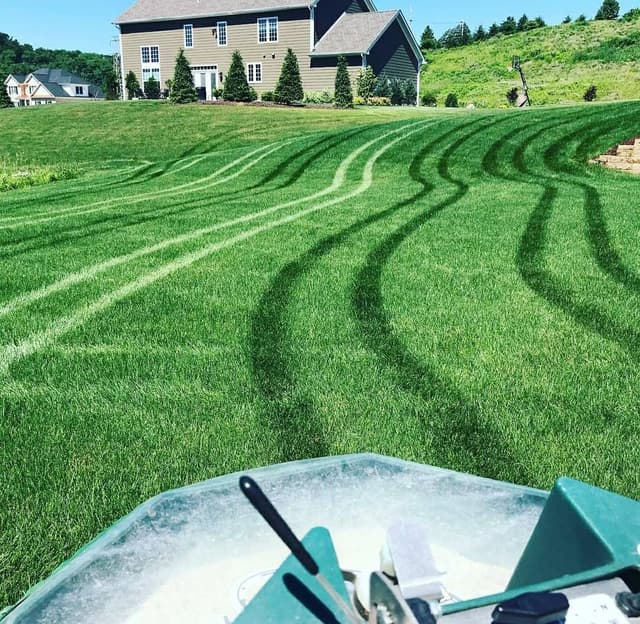
Spray rate and spreader output adjust automatically to match ground speed, and the two preset gears hold the calibration settings, so driving faster does not change the rate. The patented PermaGreen Agitator keeps granular product from clogging or bridging in the hopper, so spreader output stays consistent.
A new operator does not have to hold a walking pace to keep the rate right, because the machine sets the rate from ground speed. PermaGreen says most operators are comfortable with basic operation within a few hours.
Larry, co-owner of Coastal Weed and Fertilization in Toms River, NJ, described a new hire's first days on the machine: "We have a new guy who's learning it and he's been on it for a couple days and he's like this thing's amazing." In the same video, Larry said the new operator is "banging out 35-40 [lawns] a day."
Can better equipment help you keep technicians?
Equipment can help, but it is not a retention plan by itself. Pay, hours and management are separate problems that a machine does not touch.
Andy, listed in PermaGreen's customer videos as owner of Terrace Finance in Henderson, NV, bought a PermaGreen after, in Andy's words, "the workers started demanding easier life." In the same video, Andy said: "We bought one of these machines, was able to take three technicians and turn it into one, never had an injury in the five years I've had the product." That is one owner's account, not a figure PermaGreen has measured.
How do you test it on your own routes?
Run one machine on your hardest route for a full application round and compare it with the way you work now. Track four things: properties finished per day, trips back to the truck, callbacks for skips or stripes, and what the operator says at the end of the day.
PermaGreen's published figure is that most operators treat 10 or more additional lawns per day compared with walk-behind equipment. Your number depends on route density, property size and product mix, so measure your own.
The purchase terms limit the risk of the test. The Triumph carries a 60-day buy-back guarantee: if you are not completely satisfied within the first 60 days, PermaGreen buys it back for a full refund and covers the return shipping. It also has a 12/24/36-month limited warranty. Shipping is free within the continental US, though a residential address, a lift gate or a pallet jack can add a charge.
Bottom line
On a walk-behind route, the applicator walks every lawn and the application rate follows walking speed. On the Triumph, the operator rides at 3.5 or 5 mph and the rate follows ground speed, so the work is less physical and the result depends less on who runs the route.
See the full specifications on the Triumph specs page, compare it with other machines on the comparison pages, or configure one and see today's factory-direct price on the build page. To talk it through, call PermaGreen at (866) 883-3456.